Dr. Gymbro
←

#motor units

1 article
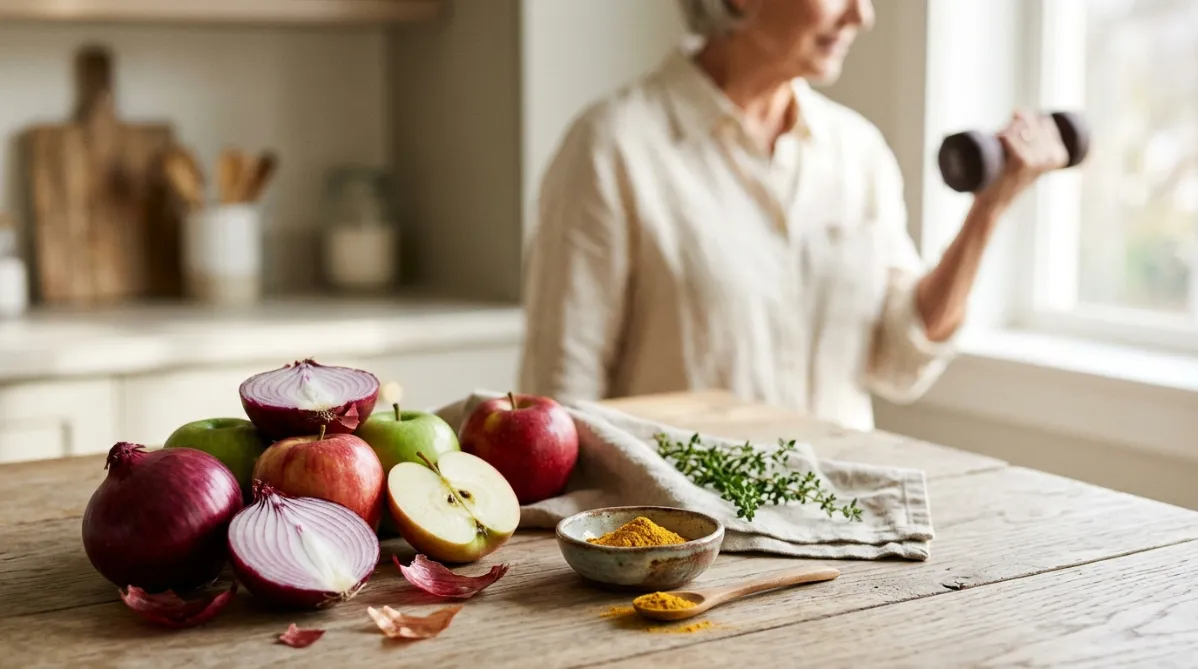
A landscape editorial photograph of a rustic kitchen table in soft morning window light. On a weathered light oak surface, a loose arrangement of fresh red onions, a few halved to show their purple-white rings, and crisp red and green apples, one sliced open to reveal pale flesh. A small ceramic bowl holds a pinch of golden-yellow quercetin powder, with a wooden spoon resting beside it. In the softly blurred background, an older woman in a cream linen shirt lifts a modest dumbbell near a sunlit window, her posture strong and relaxed. Her silhouette is out of focus, which keeps the produce as the main subject.

The palette is warm and natural: deep magenta onion skins, glossy apple reds, buttery yellow accents, and creamy neutrals. A gentle shallow depth of field gives creamy bokeh in the background. The light is diffused and golden, with delicate shadows and a few dried onion skin flakes scattered across the wood for texture. A folded linen napkin and a small sprig of thyme add a curated, modern lifestyle-magazine feel.

The composition follows the rule of thirds, with the produce at lower left and negative space on the right, where the blurred lifter and window glow provide balance. The overall look is clean, calm, and contemporary, like a premium health and wellness journal cover: natural, tactile, and optimistic, with fine film-like grain and true-to-life color.
nutrition

Quercetin a triplat câștigurile de forță la sportivii în vârstă — fără creștere musculară

BY DR. GYMBRO ·

Un flavonoid ieftin, prezent în ceapă și mere, ar putea amplifica câștigurile de forță la sportivii în vârstă mult peste ceea ce poate oferi singur antrenamentul. Într-un studiu randomizat, dublu orb, adulții în vârstă care au luat 200 mg/zi de glicozide de quercetin au înregistrat o creștere de aproximativ 15 % a forței la extensia genunchiului în șase săptămâni, comparativ cu circa 5 % în grupul placebo. În mod surprinzător, masa musculară nu s-a modificat în niciun grup. Avantajul a provenit din sistemul nervos, unde unitățile motorii cu prag înalt s-au activat mai rapid. Iată ce a arătat studiul, cum poți aplica rezultatele și de ce dimensiunea mică a eșantionului impune prudență.

This page is available in